Virginia Governor Spanberger Delivers Vetoes on Fairfax Casino Referendum and Statewide Skill Games Expansion

Unpacking the Bills at the Center of the Controversy
Senate Bill 756 aimed to greenlight a referendum for a casino in Fairfax County, a move that would have put the question directly to voters in one of Virginia's wealthiest and most populous areas; proponents saw it as a way to boost local revenue while tapping into the growing demand for resort-style gaming, especially since nearby jurisdictions already host successful operations. And then there's Senate Bill 661, which sought to legalize up to 25,000 skill games across the state, those electronic machines often found in gas stations, bars, and convenience stores that blend elements of chance with player input, promising a regulated framework to bring them out of the shadows after years of legal ambiguity.
What's interesting here is how these bills emerged from the General Assembly's 2026 session, building on Virginia's decade-long evolution in gambling laws that started with sports betting legalization in 2019 and expanded to five commercial casinos by 2026; lawmakers pushed both measures through with bipartisan support, viewing them as economic lifelines amid budget pressures, yet they landed on Governor Abigail Spanberger's desk amid heated debates over regulation and equity.
Veto Timeline Unfolds in Early April 2026
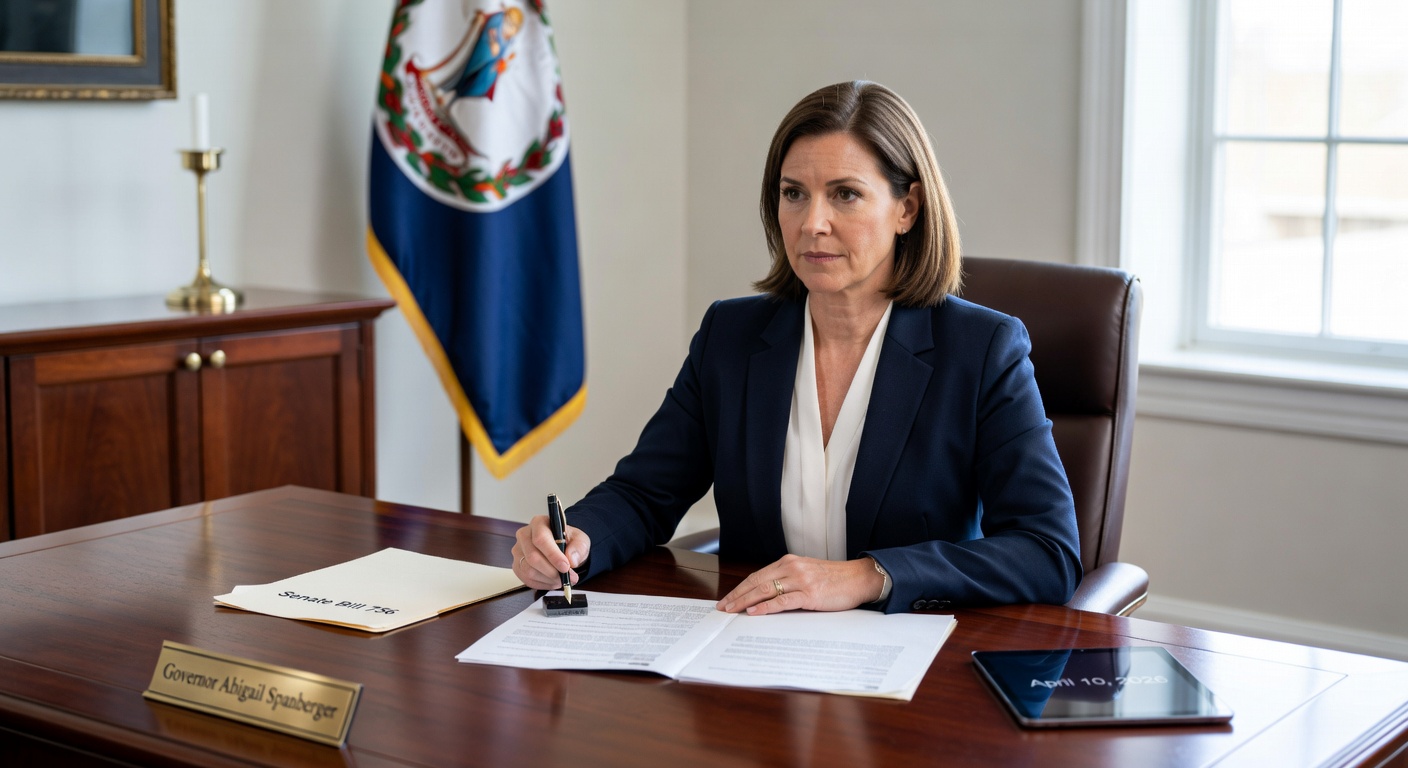
On April 10, 2026, Governor Spanberger formally vetoed Senate Bill 756, halting the Fairfax County casino referendum just weeks before the session's end; the very next day, April 11, she followed up by vetoing Senate Bill 661, effectively blocking the skill games rollout statewide. According to reports from Gambling Insider, these actions came after extensive review, with the governor's office issuing statements that highlighted longstanding concerns rather than knee-jerk reactions.
Turns out, the timing mattered; the General Assembly had adjourned earlier that spring, but vetoes like these trigger a reconvene opportunity, setting the stage for what could be a dramatic showdown when legislators return on April 22, 2026. Observers note that such moves aren't uncommon in Virginia politics, where governors have wielded the veto pen effectively on gaming issues before, like the 2023 debates over online casino proposals that fizzled without overrides.
One case that comes to mind involves a similar 2024 push for regional skill game pilots, where partial legalization passed only to face court challenges; this time around, full statewide approval hung in the balance until Spanberger stepped in, her decisions echoing patterns where executives prioritize oversight over rapid expansion.
Governor's Stated Reasons: Regulation and Equity Concerns Take Center Stage
Governor Spanberger pointed to the absence of a centralized regulatory authority overseeing all forms of gambling in Virginia, arguing that without it, oversight gaps could widen as new venues proliferate; skill games, in particular, operate in a patchwork of local rules, and casinos demand uniform standards to prevent money laundering or underage access. But here's the thing—she also flagged how these machines clustered disproportionately in lower-income and minority communities during the COVID-19 pandemic, data from that era showing spikes in placements near urban food deserts and high-poverty zip codes, raising questions about predatory siting even if operators claim otherwise.
Evidence from state audits during the pandemic backs this up, revealing that skill game locations ballooned by over 300% in certain Richmond and Norfolk neighborhoods between 2020 and 2022, often without zoning checks; Spanberger's veto messages emphasized that piecemeal legalization ignores these trends, potentially exacerbating vulnerabilities rather than channeling tax revenue fairly. And for the Fairfax casino, while it promised jobs and tourism dollars—projections from bill sponsors estimated $500 million annually in economic impact—teh governor stressed that fragmented authority undermines public trust, especially when existing casinos in Portsmouth and Danville already navigate strict lottery oversight.
Figures from the fiscal note on Senate Bill 661, published April 8, 2026, projected $200 million in new state taxes from skill games alone, yet critics within the administration countered that unmonitored growth could lead to revenue shortfalls if federal probes or lawsuits arise, as seen in Pennsylvania's skill game battles where courts struck down expansions in 2025.
Legislative Override: A High Bar Awaits on April 22
Now the ball's in the lawmakers' court; Virginia's constitution requires a two-thirds majority in both the House of Delegates and Senate to override a veto, a threshold that's proven tough—successful overrides on gaming bills have happened just twice since 2010, most recently in 2021 for horse racing reforms. With the reconvene slated for April 22, 2026, supporters of the bills are rallying delegates, pointing to public polls where Fairfax voters showed 58% support for the casino referendum in pre-veto surveys conducted by local chambers.
Senate Bill 661 backers, including convenience store associations, argue that regulation beats the current black-market status quo where an estimated 40,000 unregulated machines already operate statewide; they plan floor speeches highlighting lost tax dollars—up to $400 million annually per industry estimates—and vow to amend the bill for stronger local controls if needed. Yet opponents, aligned with the governor, prepare counterarguments on equity, ready to peel off moderate votes in the 100-member House where slim majorities often decide fates.
People who've watched these sessions closely remember the 2025 session override attempt on a lottery expansion veto, which fell short by six votes after amendments failed; that drama suggests this round could drag into late April, with side deals on regulatory boards potentially swaying undecideds.
Virginia Gambling Landscape Shapes the Debate
Virginia's gambling scene has exploded since 2020, when voters approved casino referendums in five cities, leading to operational resorts in Bristol, Danville, Norfolk, and Portsmouth by 2026, plus temporary facilities generating $1.2 billion in wagers last year alone; sports betting handles $8 billion annually through apps like DraftKings, all under the Virginia Lottery Department, which collected $450 million in taxes in fiscal 2025. Skill games, however, remain in limbo—classified as illegal gambling by courts yet tolerated locally—creating a Wild West dynamic that Bill 661 aimed to tame.
Fairfax County's proposal stood out because it's not a struggling city like the others; as a D.C. suburb with median incomes over $130,000, it eyed a luxury casino to compete with Maryland's MGM National Harbor, which draws 20,000 Virginia visitors daily. But Spanberger's veto underscores a broader tension: expand responsibly or risk social costs, especially since studies from the American Gaming Association found Virginia's problem gambling hotline calls rose 25% post-casino openings, concentrated in skill-game heavy areas.
It's noteworthy that neighboring states like West Virginia legalized skill games with caps in 2024, netting $150 million in revenue while imposing player loss limits; Virginia lawmakers have cited those models, but without a unified regulator—the sticking point—the governor held firm. And as reconvene nears, industry groups lobby quietly, while community advocates in Norfolk push for veto sustainment, citing pandemic-era data where skill game debts correlated with eviction spikes in minority neighborhoods.
Take one researcher from the University of Virginia who analyzed 2022 placement maps; their work showed 72% of new machines within a mile of low-income housing, fueling arguments that legalization without bans on predatory zoning just formalizes inequities.
Looking Ahead: Implications for Overrides and Future Sessions
So what happens next? The April 22 reconvene kicks off at noon, with veto sessions typically wrapping in days unless overrides stall; if successful, Fairfax's referendum could hit November ballots, while skill games might launch by July under lottery rules. Failure means both bills die, forcing sponsors to refile in 2027 with compromises like a dedicated gaming commission, which Spanberger has endorsed in past addresses.
Observers predict tight votes—Senate Bill 756 passed 28-12 initially, needing 27 for override, while Bill 661 cleared 22-18, just shy of the 27-vote supermajority; horse-trading on budget items could tip scales, as delegates eye midterms where economic promises play big. That's where the rubber meets the road for Virginia's gambling future, balancing revenue windfalls against regulatory rigor in a state that's become a Southeast gaming hub.
In the end, these vetoes spotlight how one executive decision reshapes legislative momentum, with all eyes on Richmond come late April 2026.