Seasonal Tourism Fluctuations and Their Impact on Table Game Availability at Mountain Resort Casinos
Zara Vogel · Aug 2, 2026
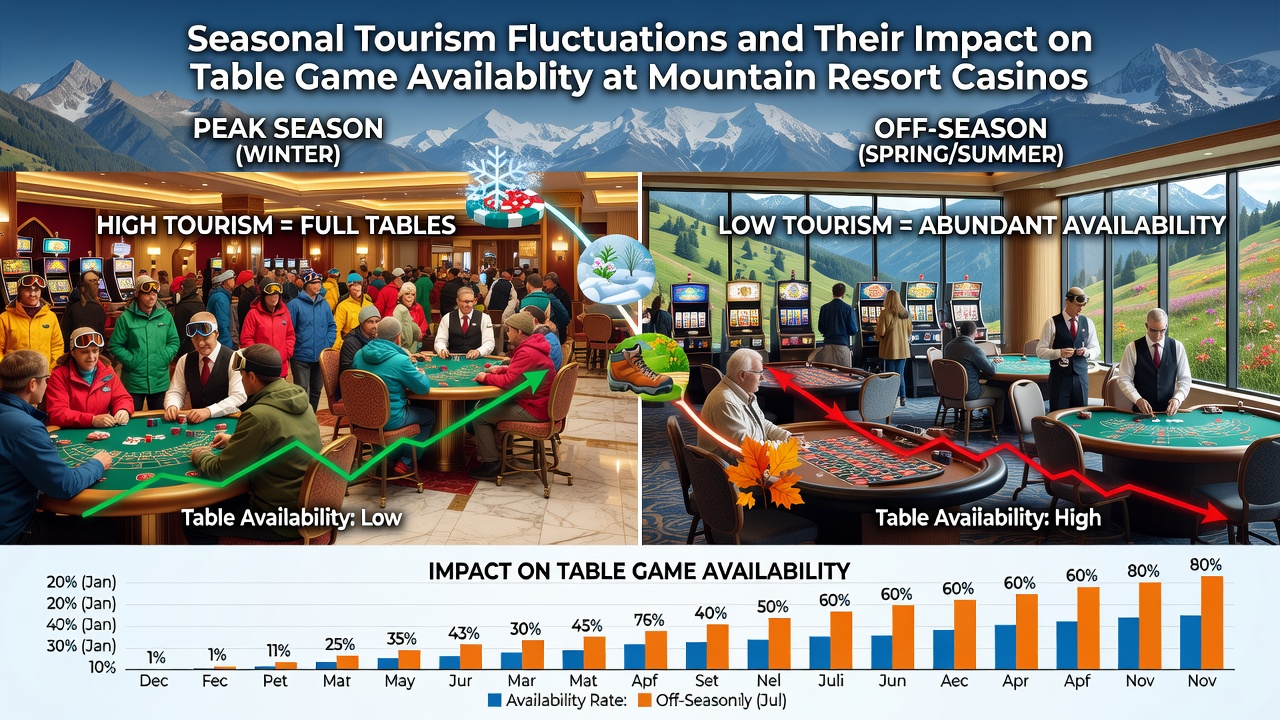
Seasonal Tourism Fluctuations and Their Impact on Table Game Availability at Mountain Resort Casinos
Seasonal tourism patterns drive visitor numbers at mountain resort casinos located in regions such as the Colorado Rockies and the Sierra Nevada range, where winter peaks coincide with skiing and snowboarding activities while summer draws hikers and outdoor enthusiasts, yet shoulder months see marked drops in arrivals that force operators to adjust table game offerings accordingly.
Data collected by state gaming regulators shows that casinos in these areas expand blackjack, roulette, and poker tables during high-demand periods because increased foot traffic from tourists sustains higher occupancy rates, whereas off-season declines lead facilities to consolidate tables or limit operating hours to match reduced demand and maintain operational efficiency.
Patterns of Visitor Influx Across Mountain Destinations
Winter months from December through March typically generate the strongest tourism surges at mountain properties because ski resorts attract regional and international travelers, and observers note that casinos positioned near major slopes experience table game utilization rates climbing above 80 percent on peak weekends according to internal operational logs shared with industry analysts. Summer tourism from June to August follows with steady but lower volumes focused on festivals, hiking trails, and scenic drives, while transitional spring and fall periods register the lowest arrivals and prompt facilities to reduce active tables by 30 to 50 percent based on historical occupancy figures.
Research compiled through tourism boards indicates that August 2026 recorded moderate upticks in certain Colorado mountain counties due to late-summer events, yet overall numbers remained below winter highs and influenced staffing decisions for table game dealers who often shift to part-time schedules during quieter stretches.
Adjustments to Table Game Availability
Management teams respond to these cycles by monitoring advance bookings and local event calendars, then scaling the number of open tables in real time because fixed costs for dealer wages and floor space require careful calibration to revenue projections. When visitor counts fall, properties consolidate games into fewer pits or shorten daily hours for less popular variants such as baccarat or craps, which allows remaining staff to concentrate on high-traffic options like blackjack while preserving floor layout flexibility.
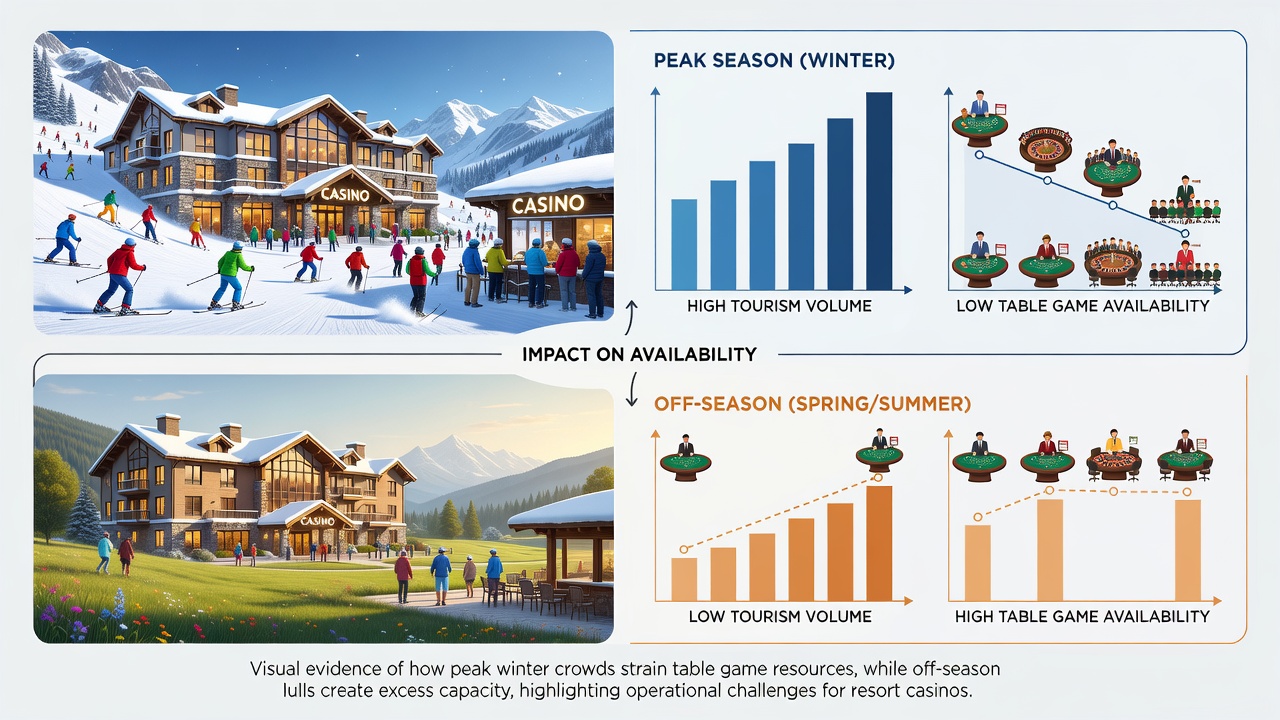
Industry reports from the Colorado Division of Gaming reveal that facilities in mountain counties adjusted table counts downward by an average of 22 percent during spring shoulder months in recent years, and similar patterns appear in Nevada's high-elevation properties where summer tourism supports steady but not maximal demand. Operators also coordinate with nearby hotels and ski operators to forecast weekly needs, which helps avoid overstaffing while ensuring enough games remain available for loyal local players who continue visiting year-round.
Regional Comparisons and Operational Strategies
Properties in the Canadian Rockies demonstrate parallel responses because tourism data from provincial agencies shows winter dominance from ski visitors followed by quieter periods that lead casinos to limit table game spreads and redirect resources toward slot machines or entertainment programming. European mountain destinations in the Alps apply comparable tactics during shoulder seasons, where reports from regional tourism studies document reduced dealer shifts and consolidated gaming areas to align with fluctuating international arrival statistics.
Those who track these trends point out that advance reservation systems and mobile apps now help properties communicate real-time table availability to guests, while dynamic scheduling software allows quick expansion when unexpected tourism spikes occur from weather events or regional promotions. Such tools minimize downtime and help maintain player satisfaction across varying demand levels without requiring permanent increases in staffing commitments.
Conclusion
Seasonal tourism fluctuations continue to shape table game availability at mountain resort casinos through predictable cycles that operators address with data-driven adjustments, and ongoing monitoring of visitor statistics from multiple regions supports more precise planning that balances service levels with cost management throughout the calendar year.