Patterns in Player Migration Between Land-Based Venues and Digital Platforms During Regulatory Transitions in Emerging Markets
Henrik Reed · Jul 19, 2026
Patterns in Player Migration Between Land-Based Venues and Digital Platforms During Regulatory Transitions in Emerging Markets
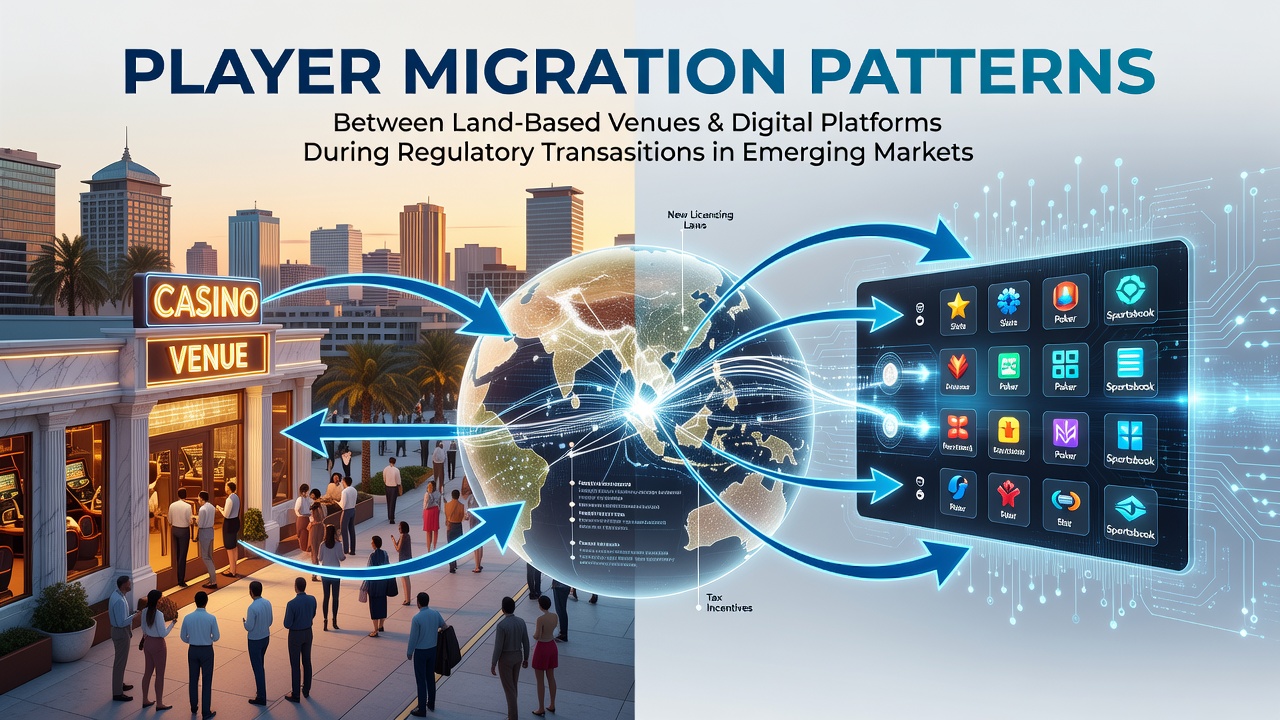
Regulatory shifts across emerging markets have produced measurable changes in how players move between land-based venues and digital platforms, with data from multiple jurisdictions showing consistent directional patterns during transition periods. Governments in Latin America, Southeast Asia, and parts of Africa have introduced licensing frameworks, tax structures, and compliance requirements that alter access and operating conditions for both physical casinos and online operators. These changes coincide with periods when player activity redistributes rather than disappears, as individuals adjust to new rules on deposits, game availability, and verification processes.
Research conducted by regional gaming authorities indicates that digital platforms often record increased registration volumes in the months immediately following land-based restrictions or tax increases. In markets where physical venues face higher operational costs or reduced operating hours, players have shifted portions of their activity online once digital licenses become active. The transition timelines vary by country, yet the sequence typically begins with announcements of new regulations, followed by a temporary dip in overall participation, then a rebound concentrated on compliant digital channels.
Regulatory Triggers and Timing Patterns
Observers tracking events in the Philippines note that PAGCOR's 2026 revenue projections and licensing updates created conditions where operators expanded online offerings while certain land-based sites adjusted their floor plans. Similar sequences appeared in Brazil after federal sports betting legislation took effect, where licensed digital operators captured activity previously handled through informal channels. Data compiled by national statistics offices shows that digital transaction volumes rose within 90 days of each regulatory milestone, while land-based foot traffic stabilized at lower levels than pre-transition baselines.
July 2026 marks several scheduled compliance deadlines in multiple jurisdictions, including updated reporting requirements for operators in parts of Southeast Asia and Eastern Europe. These deadlines have prompted players to complete verification steps earlier than usual, accelerating account creation on platforms that already meet the new standards. Migration does not occur uniformly; segments of the player base with preferences for live table games remain anchored to physical locations longer, whereas slots and sports betting participants move more readily once mobile applications receive approval.
Geographic Variations in Migration Speed
Patterns differ by region because enforcement mechanisms and infrastructure readiness vary. In countries with widespread mobile penetration and established payment rails, digital uptake accelerates once regulations clarify tax treatment and player protection rules. Markets still developing digital identity systems experience slower shifts, with players testing both environments during the overlap period. Academic studies from institutions in South America have documented that hybrid behavior, where individuals maintain occasional visits to physical venues while increasing online sessions, represents the most common intermediate stage before full migration or return.
Payment and Verification Influences
Changes to deposit and withdrawal rules frequently act as the decisive factor in migration decisions. When land-based venues impose stricter cash-handling protocols or when digital platforms introduce faster, regulated e-wallet options, activity flows toward the more convenient channel. Figures released by central banks in emerging economies reveal spikes in licensed digital gambling transactions that align with the rollout of instant payment interfaces. These interfaces reduce friction compared with cash-based systems at physical sites that must comply with enhanced anti-money laundering checks.
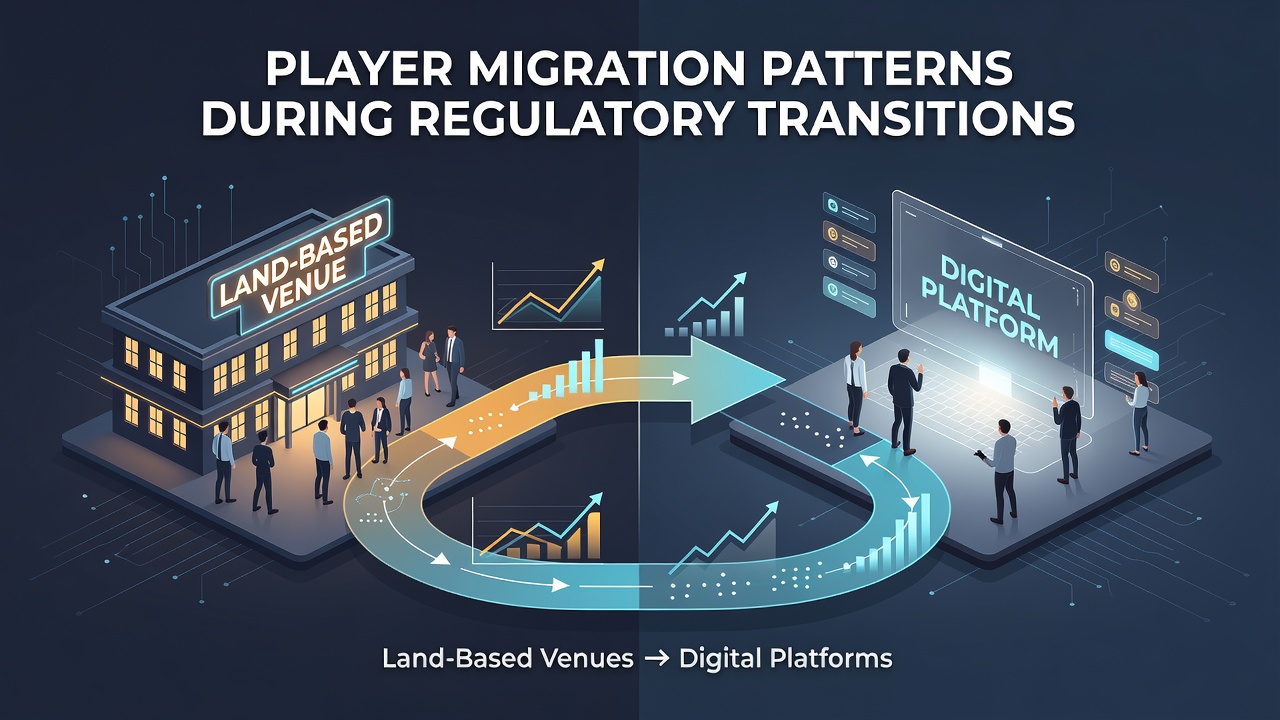
Industry associations representing operators across Africa and the Caribbean have compiled session-length data indicating that digital platforms retain users for shorter individual sessions yet higher overall frequency once regulations stabilize. Land-based venues, by contrast, see longer but less frequent visits from the remaining core audience. The net effect on total handle depends on how quickly new digital licenses convert previously unregulated activity into monitored channels.
Longer-Term Stabilization Trends
After initial transition volatility subsides, markets tend toward a new equilibrium rather than complete replacement of one format by the other. Evidence from regulatory filings shows that successful operators maintain parallel presences in both environments, allowing players to choose based on convenience, game type, and social factors. Jurisdictions that introduced clear dual-licensing pathways recorded lower rates of player attrition to unlicensed offshore sites compared with regions that delayed digital approvals.
University-led research projects examining transaction logs from licensed operators have identified recurring cycles tied to tax rate adjustments and advertising restrictions. When authorities raise fees on physical venues without corresponding digital measures, migration accelerates; when both segments face comparable compliance burdens, the shift slows and partial reversion occurs. These cycles repeat across different regulatory waves, suggesting the pattern is structural rather than tied to any single policy announcement.
Conclusion
Player migration between land-based venues and digital platforms during regulatory transitions follows predictable sequences shaped by licensing timing, payment infrastructure, and enforcement consistency. Data from multiple emerging markets demonstrates that activity redistributes rather than contracts when clear pathways exist for both formats. Observers monitoring developments through July 2026 and beyond will likely see continued refinement of these patterns as additional jurisdictions finalize their frameworks and publish comparable statistics.